ReCurv
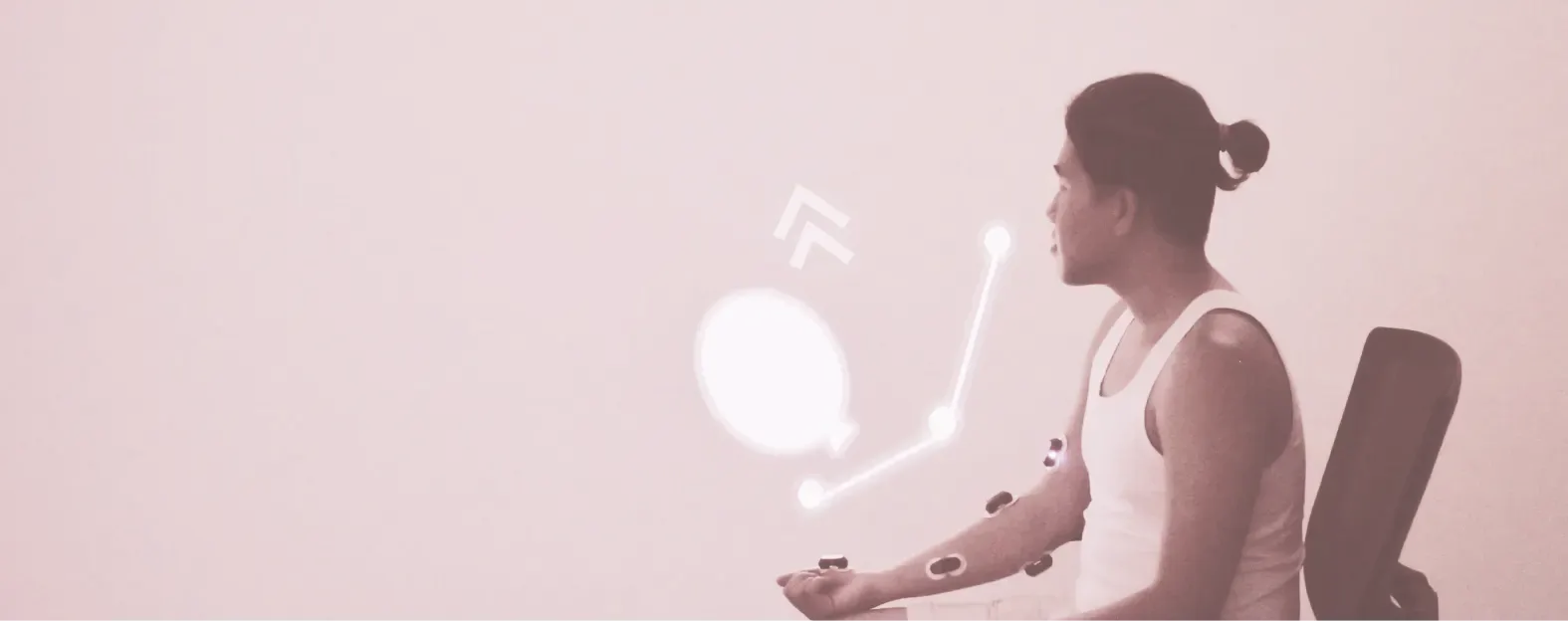
Stroke rehabilitation, at home.
Sensors read the muscles; a game on the wall keeps you going.
Recovering from a stroke is long, and easy to give up on.
Patients get little feedback, rarely talk with their doctors, follow exercises that aren’t made for them, and struggle to keep at it.
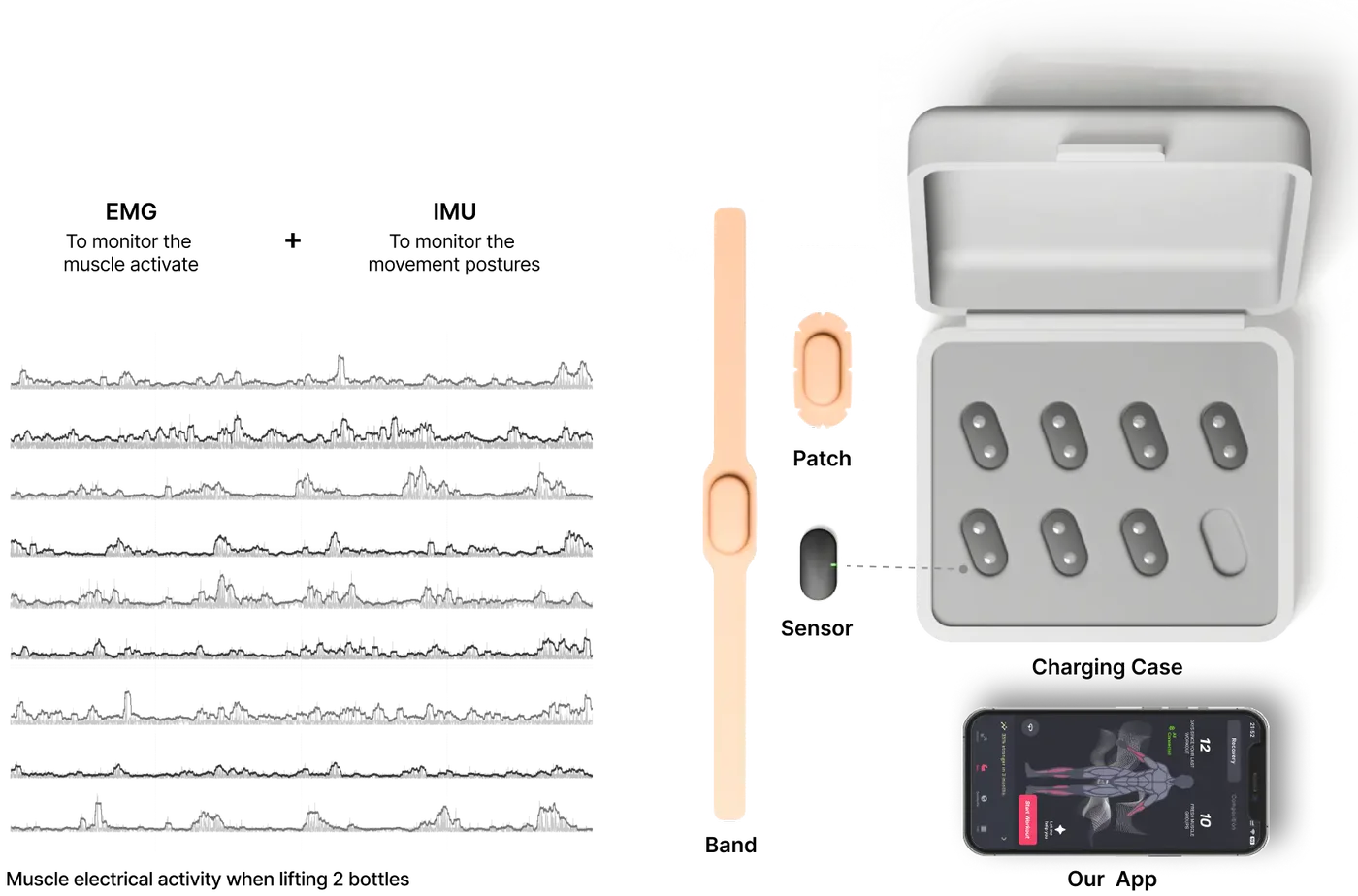
Small sensors on the arm track each muscle.
EMG reads how each muscle activates, and an IMU reads the pose. The sensors live in a charging case and attach with a patch or a band.
- SensorsEMG and IMU
- Algorithm and remote doctor
- Training planin the app
- Games on the wallreal-time feedback
- Live dataa training log
An algorithm and a remote doctor keep the plan in step.
What the sensors read adjusts the training plan; the plan sets the games; the games bring back live data.
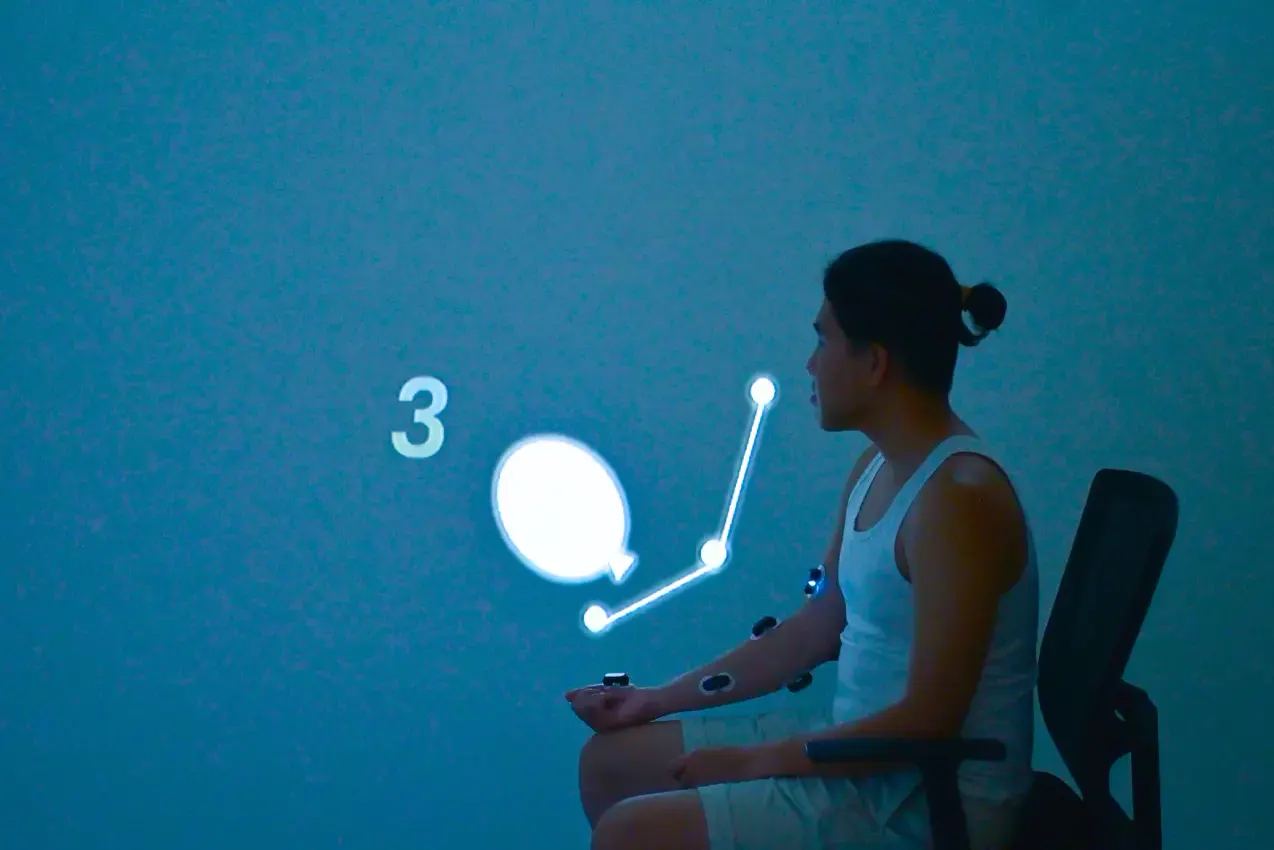
“This was way more fun than staying in the hospital!”
After Nintendo’s Ring Fit Adventure, the exercises are games projected on the wall, with feedback as you move.
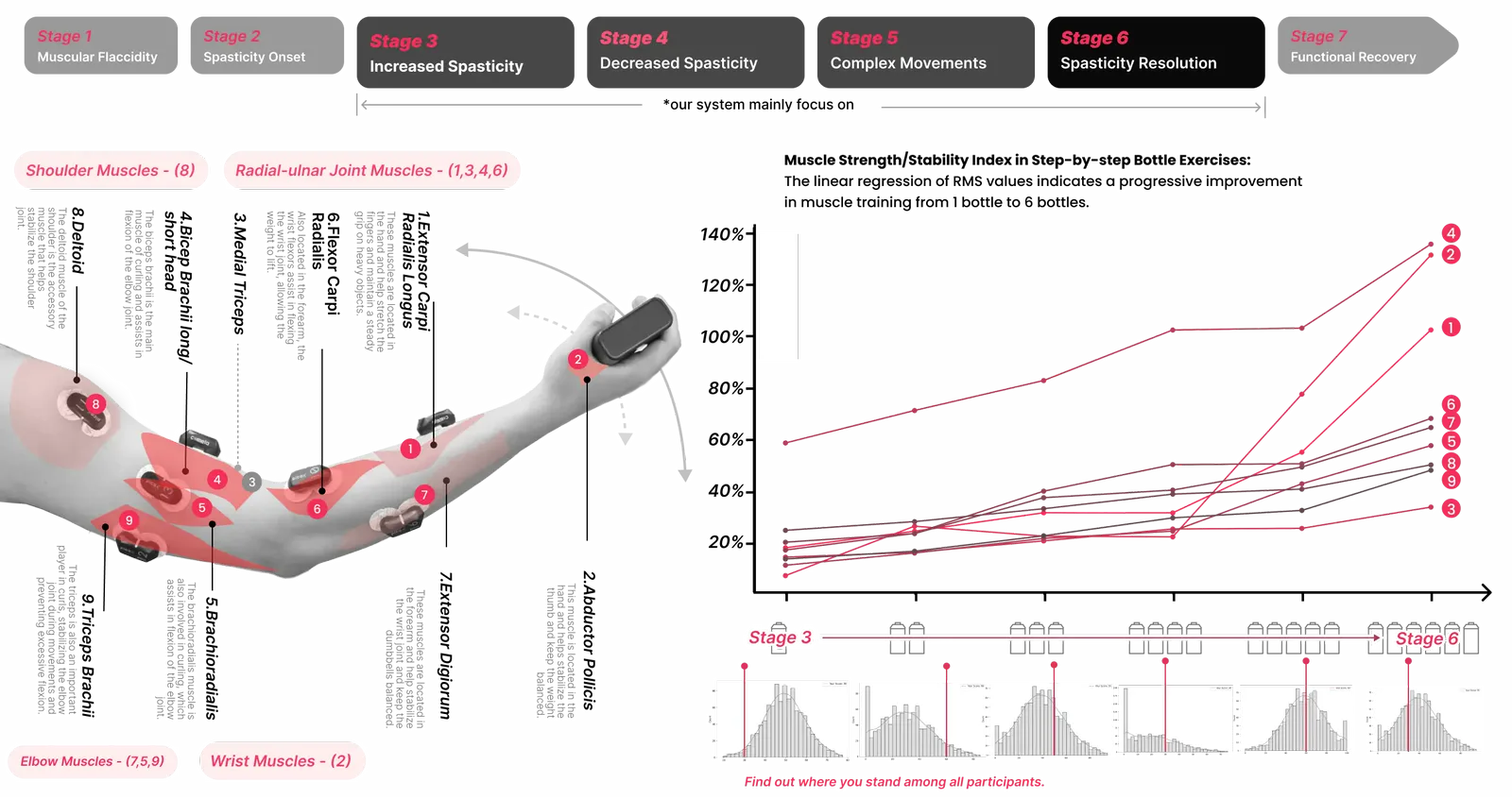
A recovery curve for each muscle.
We tracked nine arm muscles as participants lifted one to six bottles; their strength rose step by step. The curve shows where you stand among others and what to train next.
- Team
- Yike Wang, Yixi (Chris) Wu, Tommy Bao-Nghi Nguyen, Tianyu Li, Xiyu Zhang
- Workshop
- DigitalFUTURES 2024: Environmental Nudges via Eye-tracking and Bio-sensory Measures, with Zheng Chen
- Year
- Summer 2024
- Video
- Watch the demo